
Wind and gravel
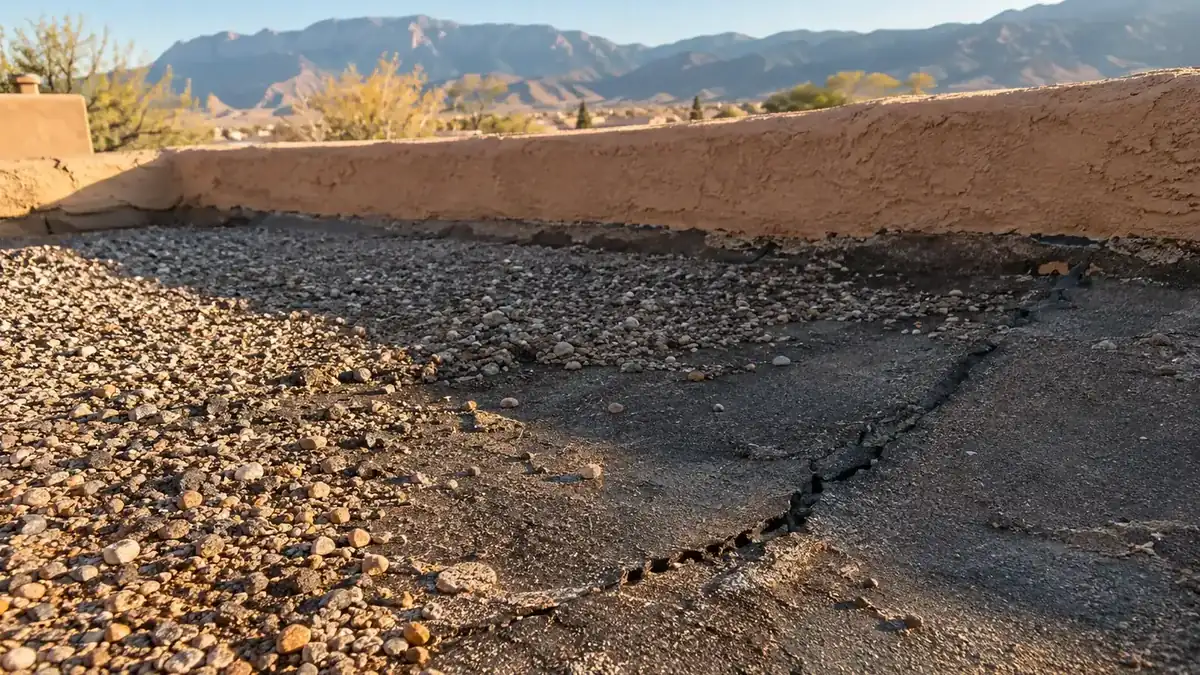
The gravel on a built-up roof is what protects the asphalt from UV. In Placitas, strong wind pushes gravel into piles and leaves bare spots, especially near roof edges and corners. Once the asphalt is exposed, it dries out, cracks and starts to leak.
What we look for
- Bare areas and gravel piled against parapets
- Cracked and split felts
- Blisters and soft spots
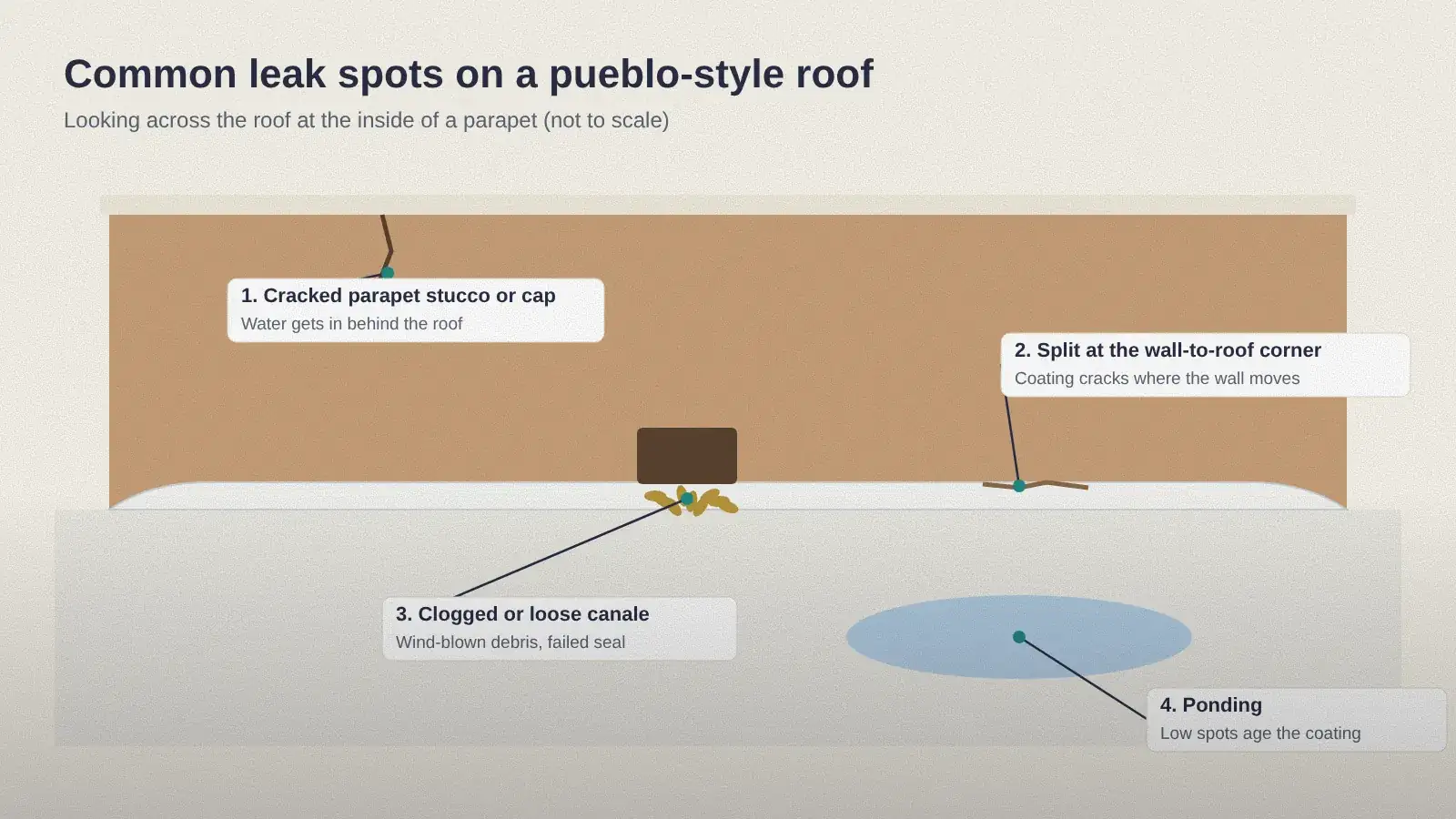
- Edges pulling away at parapets and canales
- Low areas where water and debris sit
Repair options
Limited damage can be repaired: gravel scraped back, damaged felt cut out and patched with compatible asphalt materials, edges and canales re-flashed, and gravel re-embedded. Where wind keeps scouring the same area, the long-term answer is usually a different roof surface.
Replacing it
A worn-out built-up roof is usually replaced with spray foam over a dry, prepared base, or torn off and replaced with TPO or modified bitumen. Foam and TPO have no loose gravel for the wind to move. See flat roof replacement, spray foam and TPO and modified roofs.
Call (505) 230-4024 for a free look at your built-up roof.
Questions homeowners ask
Should I replace the gravel that blew off?
Re-embedding gravel over sound areas helps, but if bare areas keep coming back, a different roof surface is usually smarter.
Can foam go over my tar and gravel roof?
Often, if it's dry and properly prepared. Wet areas are removed first.
How long will repairs last?
On a roof that's otherwise sound, several years. On a roof near the end of its life, repairs buy time while you plan a replacement.